

Gold Movement Overview
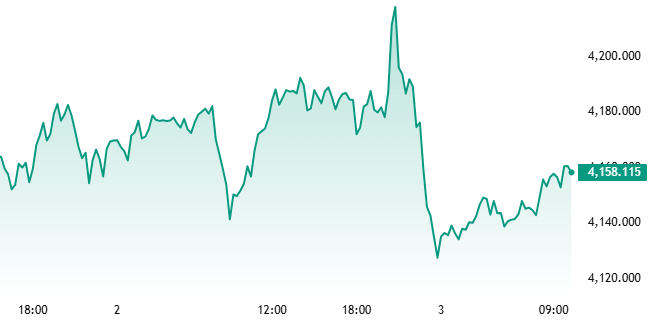
Gold edged higher on Monday, with spot prices (XAU/USD) rising 0.3% to $4,153.66 an ounce as of 08:40 UTC+8 on 5 October 2026, rebounding after posting their worst week since June. The move came as a weaker-than-expected US jobs report eased expectations for another Federal Reserve rate hike, even as elevated Treasury yields and rising oil prices kept a lid on the metal’s gains.
Key Driver Behind The Move
US nonfarm payrolls rose by just 29,000 in September, well short of analyst expectations, reducing pressure on the Fed to tighten policy further in the near term. Markets are now pricing in roughly a 20% probability of an October rate hike, down sharply from around 70% a week earlier. Because gold generates no interest income, lower rate-hike odds tend to improve its relative appeal against yield-bearing assets.
Market Data And Reaction
Gold had fallen 3.4% last week, its steepest weekly decline since June, and more than 6% over September as a whole, its worst monthly performance since the same month. Silver also slid sharply last week before rebounding alongside gold on Monday, with platinum and palladium likewise advancing. The dollar was little changed after three consecutive weeks of gains, reflecting a market still digesting the shift in rate expectations.
Broader Market Implications
Inflation risks have not disappeared even as near-term rate-hike odds fade. Oil prices have risen amid a widening Middle East conflict, after Saudi-backed forces in Yemen launched an operation aimed at retaking territory held by Iran-backed Houthi forces. Treasury yields have also stayed elevated, with some maturities near their highest levels in more than two decades; US Treasury Secretary Scott Bessent downplayed concerns over the rise, calling it broadly consistent with global trends. Higher energy prices could keep inflation elevated and complicate the Fed’s policy path even as the softer labor market reduces near-term hike pressure.
What Gold Traders Should Watch
- Minutes from the Fed’s September meeting, when policymakers hiked rates for the first time in three years, due mid-week
- Any further escalation or de-escalation in the Yemen conflict and its effect on oil prices
- Additional Federal Reserve commentary on the policy outlook
- Incoming US economic data that could further shift October rate-hike pricing