

The Canadian dollar fell to a one-week low against its US counterpart on Tuesday after softer domestic inflation reduced Bank of Canada tightening expectations and Washington announced fresh tariffs on Canadian goods. The USD/CAD pair rose to around C$1.4085 during Asian trading, leaving the loonie near 71.00 US cents.
Market Snapshot
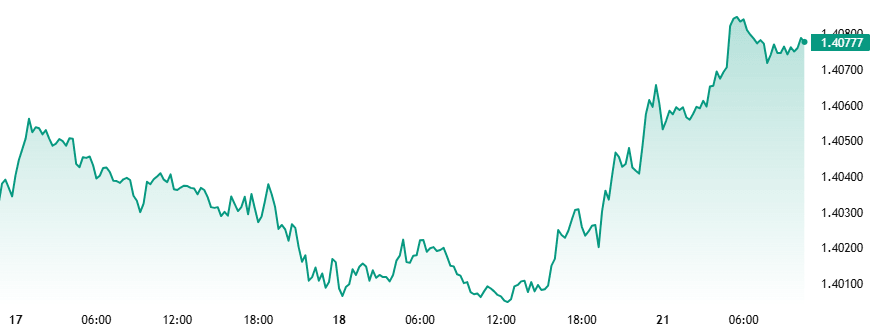
The currency had weakened 0.3% on Monday to C$1.4060 per US dollar after briefly touching C$1.4001, its strongest level since June 17. Tuesday’s move pushed USD/CAD higher for a second session.
The US Dollar Index (DXY) held near a one-week high at 100.96 as Middle East tensions supported defensive demand. Canada’s two-year bond yield ended Monday about 137 basis points below the equivalent US Treasury yield, widening the rate disadvantage facing the loonie.
Inflation Shifts BoC Outlook
Canada’s annual inflation rate slowed to 2.8% in June from 3.2% in May, below the 2.9% forecast. Consumer prices fell 0.4% from May, twice the expected decline, as petrol prices dropped by more than 10%.
Underlying pressures also eased. The Bank of Canada’s CPI-median measure fell to 1.9%, while CPI-trim declined to 1.8%, putting both below 2% for the first time in nearly six years.
The data reduced the implied probability of a BoC rate increase by December to 66% from 72%. “The market feels confident of no rate hike until maybe the end of the year,” Marc Chandler, chief market strategist at Bannockburn Global Forex, said after the release.
The BoC held its overnight rate at 2.25% on July 15 for a sixth consecutive meeting. It said the economy was improving but identified US trade policy and the Middle East conflict as the largest risks to inflation and growth.
Tariffs Reopen Trade Risk
US President Donald Trump announced a 50% tariff on a broad range of Canadian imports, including wine, cement, dairy products, furniture and ice hockey equipment. The measures take effect on August 19 under Section 338 of the Tariff Act of 1930, its first known use in nearly a century.
The levies will apply even to qualifying goods under the United States-Mexico-Canada Agreement. Energy, potash, fish, critical minerals and products covered by separate national-security tariffs are exempt.
Canadian Prime Minister Mark Carney said Ottawa had proposed ways to settle the disputes and remained ready for intensive talks. The escalation added uncertainty for exporters and raised the risk of retaliation and weaker cross-border investment.
Fed and Gulf Risks Support Dollar
The dollar also drew support from expectations that elevated oil prices could renew inflation pressure and keep the Federal Reserve on a tighter path than the BoC. US 10-year Treasury yields traded near 4.59% on Tuesday as markets assessed whether the Gulf conflict would lift transport and energy costs.
Yemen’s Iran-aligned Houthi movement declared a naval blockade against Saudi Arabia, while Iran considered a proposed 10-day ceasefire. “It’s all still very volatile,” National Australia Bank strategist Rodrigo Catril said.
Oil Cushions Loonie
Oil remained near six-week highs, offering some support to the commodity-linked Canadian dollar. US crude traded around $82 a barrel on Monday, although hopes for renewed US-Iran negotiations tempered the advance.
Canada is a major crude exporter to the United States, so higher prices can improve its trade income. That support was outweighed by the wider yield gap, soft inflation and the renewed trade confrontation.
Outlook
The loonie’s next move will depend on whether Washington and Ottawa make progress before the tariffs take effect and whether markets further reduce BoC tightening expectations. Traders will also watch Federal Reserve commentary and US data for signs that higher energy costs are changing the rate outlook.
Oil prices and Middle East developments remain a third key factor. A sustained rise in crude could support Canadian export revenues, but it could also strengthen the US dollar if investors expect higher US inflation and interest rates.