

US stock indexes surged more than 1% on Monday after President Donald Trump extended his 48-hour deadline for Iran to reopen the Strait of Hormuz, signaling potential de-escalation in the four-week conflict. The S&P 500 (SPX) jumped 1.12% to 6,632.75, while the Nasdaq 100 (NDX) climbed 1.24% to 24,400.50, reversing Sunday’s futures slide.
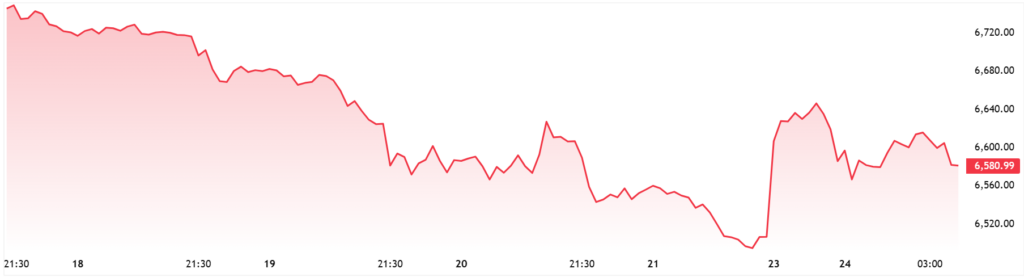
S&P 500 Chart
Market Snapshot
Dow Jones futures pared early losses to rise 0.47% at 41,654, capping four weeks of declines driven by war fears. Brent crude (LCOc1) plunged over 10% to $98 per barrel, easing inflation worries after Trump’s five-day pause on strikes. Gold prices fell $127 to $4,374 an ounce as safe-haven demand eased, while the 10-year US Treasury yield held at 3.978%.
Escalation Trigger
Trump’s original ultimatum demanded Iran reopen the strait, which carries 20% of global oil, or face strikes on energy infrastructure. Iran threatened retaliation across Middle East energy sites, keeping the chokepoint closed since late February. Sunday futures reflected peak anxiety, with S&P 500 contracts down 0.3% to 6,542 [page].
De-escalation Shift
Trump cited “constructive talks” with Iran, extending the deadline despite Tehran’s denials, boosting risk sentiment. Markets shifted from risk-off flows that dragged the S&P 500 down 1.5% last Friday and 4-7% over 30 days. “This pause buys time and crushes oil spikes,” said a New York trader.
Broader Asset Flows
The dollar index (DXY) dipped 0.24% to 99.343 as safe-haven bids unwound. Tech-heavy Nasdaq led gains on de-escalation relief, while energy stocks lagged amid Brent’s tumble. European equities tracked higher, with yields stabilizing after central banks flagged oil-driven inflation risks.
Macro Implications
Lower oil eases pressure on Fed rate paths after hawkish signals last week. Prolonged closure had fueled inflation fears, prompting global banks to eye hikes. A swift resolution supports US growth but exposes energy vulnerabilities, persistent tension risks renewed stagflation.
Key Risks Ahead
Traders monitor Iran compliance signals, US-Iran talks progress, and Strait shipping updates. Upcoming US inflation data and Fed comments will gauge policy shifts. Escalation rebounds could reverse gains swiftly.