

New 50% US tariffs on about $20 billion of Canadian goods were in force on Monday after last-minute negotiations between Washington and Ottawa collapsed. The Canadian dollar weakened as investors assessed the prospect of retaliatory duties and a prolonged trade dispute between two of the world’s most closely integrated economies.
Market Snapshot
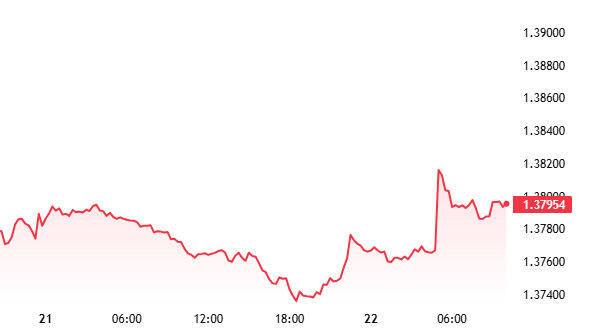
The Canadian dollar slipped 0.2% in early Asian trading on Monday to C$1.3798 per US dollar, equivalent to about 72.47 US cents.
The decline was relatively contained because the US dollar was also trading near multi-month lows against several major currencies. The loonie had reached C$1.3823 on 19 August after US President Donald Trump temporarily delayed the tariffs and said the two countries were approaching an agreement.
That optimism faded after negotiations broke down late on Friday. The new duties took effect shortly after midnight on Saturday and cover slightly more than 5% of Canada’s exports to the United States.
New Tariffs Take Effect
The 50% duties apply to a wide range of Canadian products including wine, furniture, dairy goods, cement, clothing, electrical equipment and sporting goods such as hockey equipment.
Oil, potash and critical minerals are excluded. Canada supplies the United States with more than four million barrels per day of crude oil and petroleum products, limiting the immediate effect of the new measures on US energy supplies.
The tariffs were imposed under Section 338 of the Tariff Act of 1930, a rarely used provision that allows the US president to impose duties on countries Washington determines are discriminating against American commerce.
The measures are separate from existing US tariffs affecting Canadian steel, aluminium, lumber and vehicles.
Trade Deal Collapses
Washington and Ottawa had appeared close to an agreement only days earlier. A proposed settlement could have reduced US tariffs on Canadian-built cars and trucks to 15% from 25% and cut some steel and aluminium duties to 25%.
The negotiations ultimately failed over differences involving metals, vehicles, softwood lumber and broader Canadian concessions.
US Trade Representative Jamieson Greer said Canada had declined to finalise terms previously discussed, calling the breakdown a missed opportunity. Canadian Prime Minister Mark Carney gave the opposite account, saying last-minute US changes were unfair and called the reliability of any agreement into question.
Carney subsequently suspended negotiations and recalled Canada’s trade team to Ottawa.
Canada Plans Retaliation
Canada will impose matching tariffs on selected US goods from 8 September. Ottawa has said its response will be dollar for dollar and will cover products including steel, electronics and other manufactured goods.
The escalation increases costs for companies operating across highly integrated North American supply chains. Canadian manufacturers that depend heavily on the US market face weaker demand or reduced margins, while American importers could either absorb the duties or pass some costs to consumers.
Dan Kelly, president of the Canadian Federation of Independent Business, said the breakdown was “deeply troubling” for thousands of small exporters already dealing with prolonged uncertainty.
The economic impact of the latest tariff package may be limited at the national level because it covers only a fraction of overall Canadian exports. Its effect could be considerably larger for individual industries and regions.
USMCA Faces Broader Test
The dispute also raises questions about the future of the United States-Mexico-Canada Agreement, which governs hundreds of billions of dollars in annual North American trade.
The United States and Canada conducted almost $900 billion in goods and services trade last year. Production networks in sectors such as automobiles, agriculture, metals and machinery frequently cross the border several times before a finished product reaches consumers.
A prolonged tariff conflict could therefore affect investment decisions well beyond the products directly targeted by Saturday’s measures.
Foreign-exchange markets are also dealing with broader weakness in the US dollar. AMP investment strategist Shane Oliver said US Treasury efforts to suppress longer-term borrowing costs appeared to be reviving concerns about dollar debasement. That wider move helped limit the Canadian dollar’s losses despite the deterioration in trade relations.
Outlook
Investors will watch whether Washington and Ottawa reopen negotiations after the latest escalation and how Canadian businesses respond as the new tariffs begin affecting shipments.
Attention will also turn to the details of Canada’s retaliatory measures ahead of their 8 September start date and any changes to existing US tariffs on vehicles, steel and aluminium.
For the Canadian dollar, the trade dispute will compete with domestic interest-rate expectations and oil prices. Further escalation could pressure the loonie, while a return to negotiations could restore some of the optimism that briefly lifted the currency to a two-and-a-half-month high last week.