

The US dollar strengthened on Tuesday after the Bureau of Labor Statistics reported that job openings jumped to 7.618 million in April, the highest level since June 2024 and well above the 6.8 million analysts had forecast.
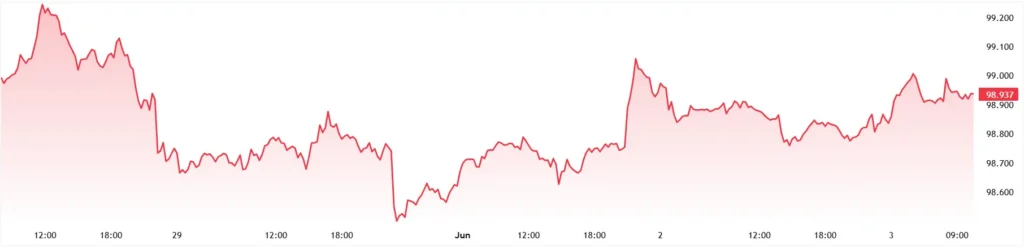
The US Dollar Index (DXY), which measures the greenback against six major currencies, climbed toward 99.20 following the release. The 731,000 increase from March’s revised 6.887 million marked the largest month-over-month gain in nearly two years.
Labor market remains tighter than expected
The JOLTS (Job Openings and Labor Turnover Survey) data showed the job openings rate rose to 4.6 percent, up 0.4 percentage points from the prior month. For the first time since early 2024, job openings outnumbered unemployed workers, suggesting the labor market continues to absorb demand despite earlier concerns about cooling.
Hiring slowed to 5.1 million in April from 5.3 million in March, while total separations fell to 5.0 million. The quits rate edged down slightly to 1.9 percent, and layoffs and discharges decreased to 1.7 million, indicating workers remain relatively confident about job prospects.
Markets brace for key labor reports this week
Traders are now focused on Friday’s May nonfarm payrolls report, which economists expect to show 100,000 to 150,000 jobs added. April’s payrolls rose by 115,000, surpassing the 55,000 forecast but showing a slowdown from March’s 185,000 increase. The unemployment rate held steady at 4.3 percent in April.
Earlier today, the ADP Employment Change report for May showed 109,000 private-sector jobs added, in line with the 110,000 consensus but below some investor expectations. Weekly initial jobless claims for the week ending May 30 are forecast at 220,000, compared to 215,000 the prior week.
Federal Reserve policy implications
The stronger-than-expected labor data reduces near-term pressure on the Federal Reserve to cut interest rates. Federal Reserve officials held the benchmark rate at 3.5 percent to 3.75 percent at their March meeting but still projected one rate cut in 2026.
Goldman Sachs Research forecasts two more cuts in 2026, potentially in March and June, which would bring the funds rate to a terminal level of 3 percent to 3.25 percent. However, the resilient JOLTS data may push markets to scale back bets on a June cut, with some traders now pricing in a 60 percent probability of easing at that meeting.
President Donald Trump’s administration has been pressing for lower rates to support economic growth, and the labor market’s strength could complicate those calls.