

The GBPUSD exchange rate has inflation data ahead of the Bank of England policy meeting on Thursday.
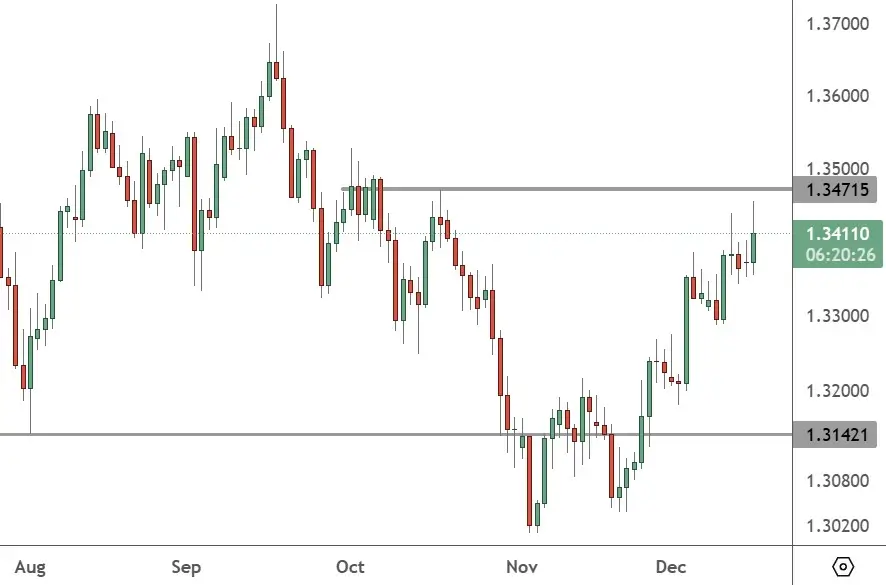
GBPUSD – Daily Chart
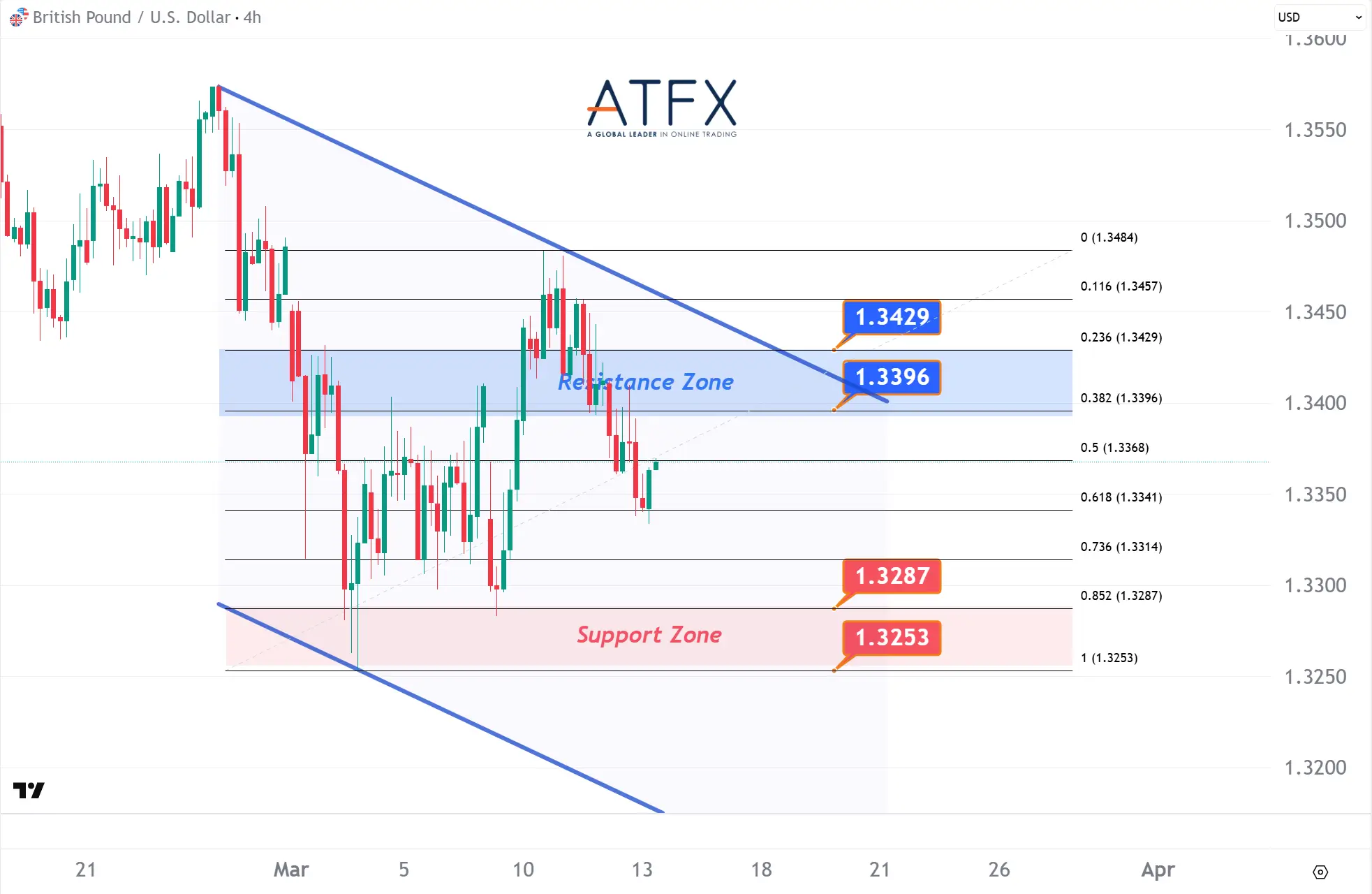
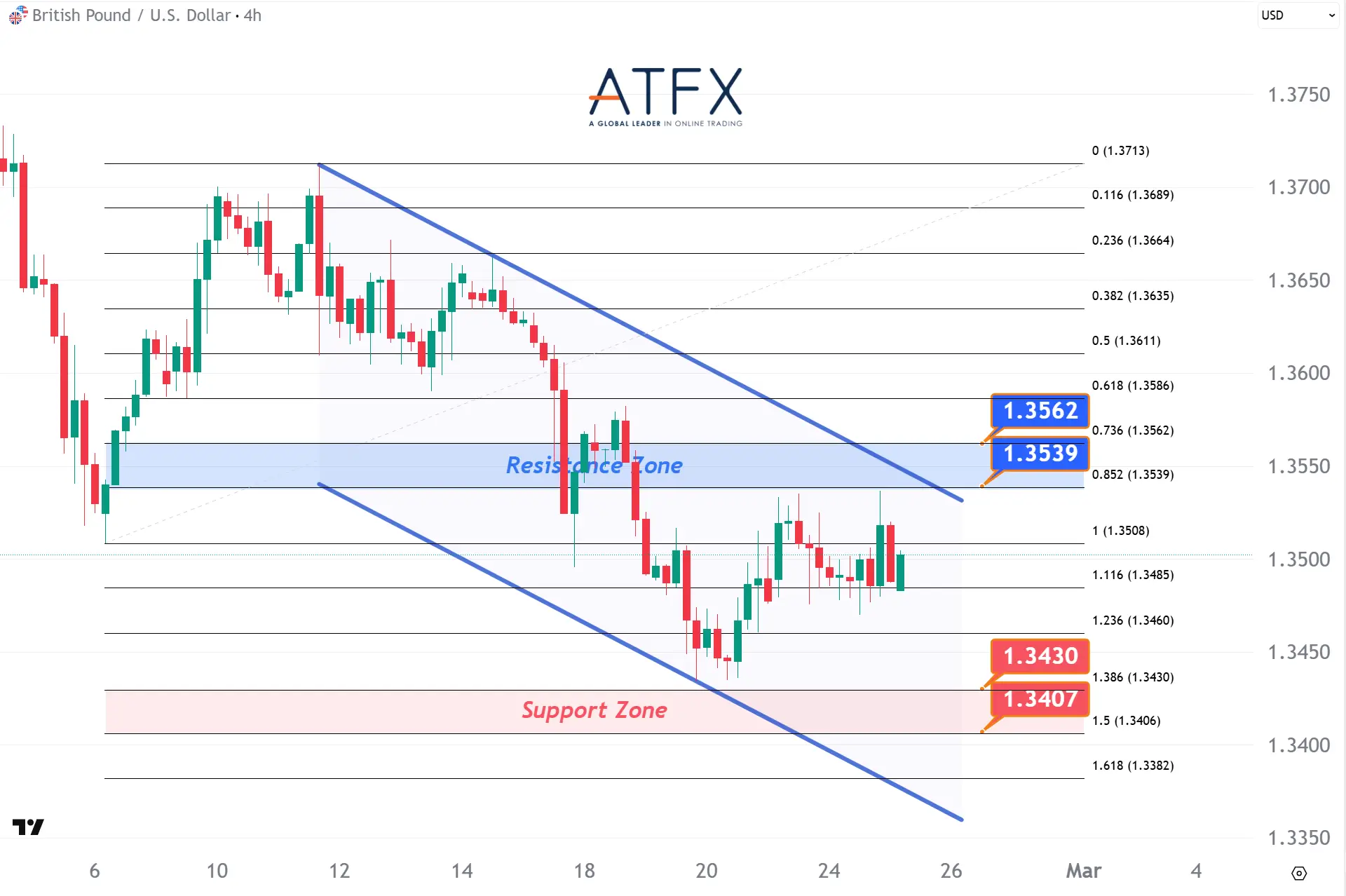
The GBPUSD has found resistance near 1.3400, with stronger selling pressure previously seen at 1.3470. That level could be the key level for this week’s data.
The UK economy has the highest inflation among developed countries and will release the latest price data on Wednesday. The consumer price index is expected to dip from 3.6% to 3.5% on an annual basis, according to estimates. The core iCPI number is expected to remain at 3.4%.
Higher food prices have been a headwind for the UK despite lower fuel prices. That has also made it hard for the economy to grow, as consumer spending is stretched.
After the economy went into reverse once again, the UK’s central bank is widely expected to cut its benchmark interest rate.
“A rate cut next week is a slam dunk, said Neil Wilson, strategist at Saxo Markets. He also sees further rate cuts throughout 2026. Asset management firm Quilter said a rate cut was less certain, but a cut next week was “increasingly likely”.
Philip Shaw at Investec predicted that BoE Governor Andrew Bailey will switch his vote to a base rate reduction at Thursday’s meeting, “resulting in another narrow majority, this time for a cut.
Sanjay Raja at Deutsche Bank said: “We expect a 5-4 vote split, with Governor Bailey having the deciding vote ahead of Christmas. What’s changed since the November meeting? Q3-25 GDP growth has slowed, with labour demand also turning weaker”.
“And most importantly, we think governor Bailey will have seen enough evidence of further disinflation, in both private sector pay momentum and prices (CPI, including services CPI), to opt for a rate cut”.
Markets are pricing in a 90% probability of a rate cut, but the balance may be more finely balanced given inflationary pressures. That could leave the GBP/USD exchange rate vulnerable to volatility if policymakers focus on inflation rather than the job market and pricing pressures.
UK unemployment rose to 5.1% in the August to October period, marking the highest level in almost five years, according to data on Tuesday. Annual wage growth was also lower at 4.6% over the same period, down from 4.7% for the previous three months.