


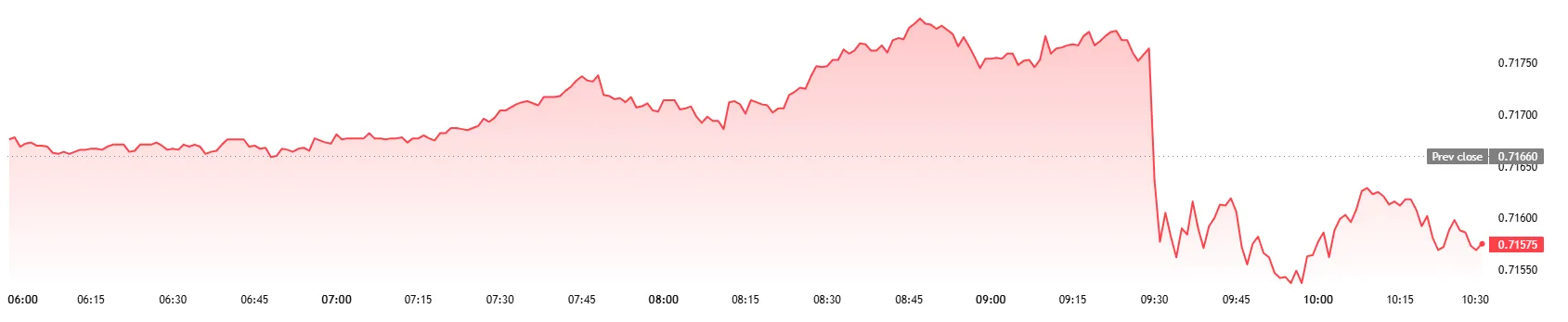
Australia’s inflation cooled more than expected in April, but sticky core prices kept pressure on the Reserve Bank of Australia and limited any relief for rate-cut bets. The Australian dollar, bond yields and rate-sensitive equities are likely to stay tightly linked to whether traders view the data as a temporary fuel-driven drop or a sign that underlying inflation is still firm.
Market snapshot
Australia’s monthly CPI rose 0.4% in April, below the 0.6% economists had expected, while the annual pace slowed to 4.2% from 4.6% in March. The trimmed mean, the RBA’s preferred core measure, increased 0.3% on the month and edged up to 3.4% year-on-year from 3.3% in March.
The mix was enough to soften the headline print but not enough to ease the broader inflation picture. Traders were watching whether the disinflation trend would broaden beyond fuel, but the core measure showed price pressures are still running above the central bank’s 2% to 3% target band.
What drove prices
The main reason for the slowdown was lower fuel costs after a government excise cut, which helped drag down the monthly pace. That followed a sharp March jump, when headline CPI surged to 4.6% and automotive fuel prices rose 32.8% from February, the ABS said.
Housing remained a major inflation source in the latest official data, and electricity costs stayed elevated as rebates rolled off. The ABS said housing inflation was 6.5% in the year to March, while transport had jumped 8.9%, underscoring how energy and administered prices continue to dominate the inflation mix.
RBA outlook
The data leaves the RBA in a difficult position ahead of its next policy decisions. Headline inflation has moved lower, but core inflation at 3.4% suggests underlying pressures are still above target and may require restrictive settings for longer.
“Today’s numbers take some heat out of the headline inflation scare, but they do not restore confidence that inflation is beaten,” a Sydney-based rates trader said. “The core print keeps the door open for the RBA to stay cautious and defend its anti-inflation bias,” another trader said.
Asset-class reaction
Rate-sensitive Australian assets are likely to respond first through government bonds and bank shares, while the Australian dollar may hold up if markets scale back hopes for near-term easing. Higher-for-longer policy expectations typically support yields and pressure domestically oriented equities, especially sectors sensitive to borrowing costs and household demand.
Globally, the print also matters because Australia is often used as a proxy for how central banks are dealing with sticky services inflation after commodity shocks fade. A persistent core reading can reinforce the idea that inflation is proving slower to normalize than headline figures suggest, especially when energy prices are volatile.
Traders are watching
Traders will now focus on the next RBA communication, any follow-up inflation prints, and labor-market data for signs of whether pricing pressure is broadening or fading. They will also watch the Australian dollar, bond futures and bank stocks for signs that the market is rethinking the odds of a policy pivot.