

Chinese EV maker BYD (HKEX: BYD) has continued to dominate global vehicle sales, but the share price has remained pressured.
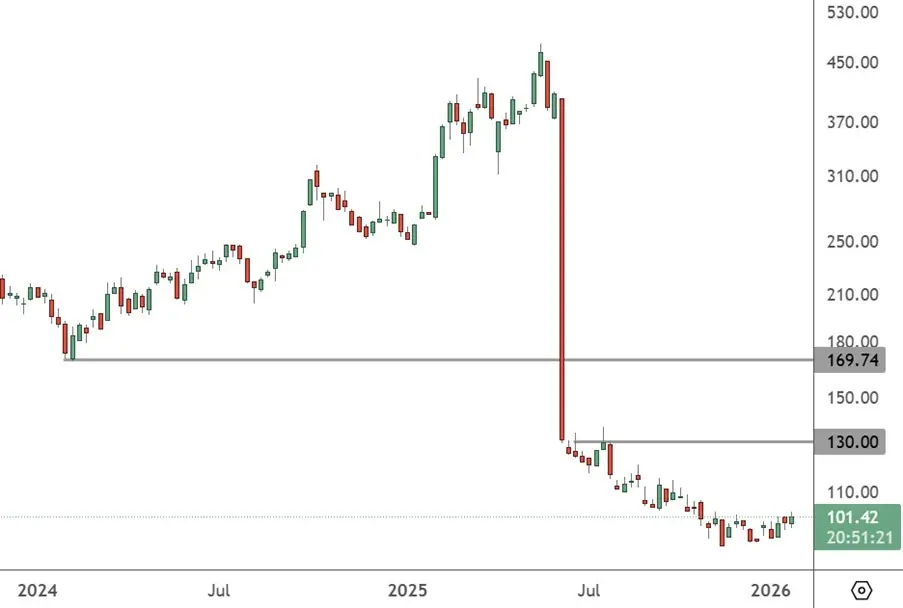
BYD – Weekly Chart
BYD shares have been slow to recover from the June crash that took the price from over 370 to 130. There are signs that support has been steady at recent lows, and growing dominance could help the price.
BYD has been the dominant player domestically, but the company is now a threat to Tesla and Volkswagen in Europe. Industry data showed Tesla’s new registrations across Europe had dropped to 27% in 2025 to around 239,000 vehicles. The company’s December sales alone were lower by 20% from a year earlier. Tesla’s market share sank from 2.1% to 1.4%, according to data from the European Automobile Manufacturers’ Association.
BYD saw its fortunes moving in the opposite direction, with sales of almost 188,000 cars, marking a huge 269% increase and lifting its market share to 1.4% from just 0.4% in 2024. The company’s more affordable electric models are proving popular with European drivers as the region’s EV market becomes more competitive.
Tesla founder Elon Musk also damaged his company’s brand by aligning himself with Donald Trump’s administration at the outset of 2024. Electric cars now account for 17.4% of all new cars sold in the EU, up from 13.6% a year ago. Traditional petrol and diesel vehicles have been losing ground due to stricter emissions regulations.
A rise in hybrid sales has coincided with a strong lobbying push by European carmakers to persuade the EU to weaken electric car sales targets. Last week, the EU confirmed the move, allowing 10% of car sales to have internal combustion engines after 2035.
Despite intensive lobbying, battery electric vehicles accounted for 18.8% of the European market, or 2.3m cars, in the first 11 months of the year. That was a gain of from 15% in the same period last year.
BYD’s growing importance in the global vehicle market could see its share price speed up on the road to recovery over the coming year, if earnings surprises boost investor sentiment.