

Market Highlight 24/02/2026
Global markets experienced heightened volatility on Monday as tariff escalation and geopolitical risks intertwined. All three major U.S. stock indices closed sharply lower, with the Dow Jones Industrial Average falling 1.66%, the S&P 500 declined 1.04%, and the Nasdaq Composite dropping 1.13%. Investors grew concerned after President Trump announced a temporary tariff increase to 15% following the Supreme Court ruling, further elevating trade policy uncertainty. AI-related stocks retreated, weighing on the tech sector, while financial shares also came under notable pressure.
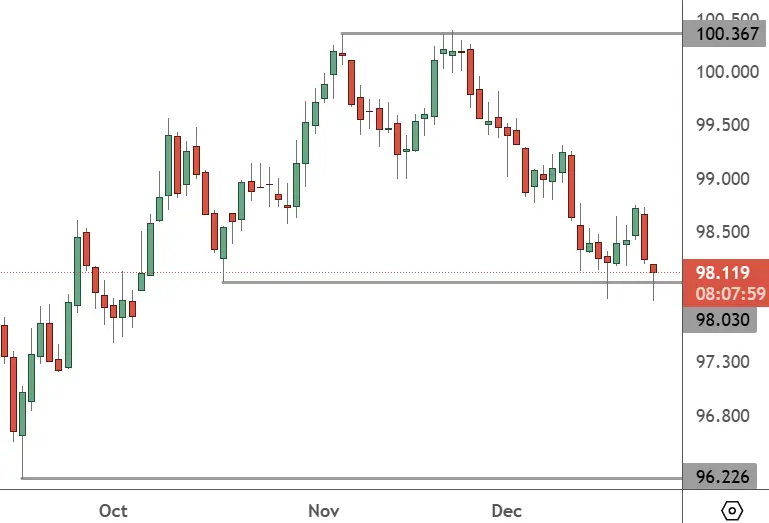
The U.S. Dollar Index weakened, retreating toward the 96.8 level. Market interpretation of tariff developments remains divided. On one hand, higher tariffs could lift inflation and reduce expectations of rate cuts, potentially supporting the dollar. On the other hand, policy uncertainty may accelerate de-dollarization concerns, weighing on the greenback. The euro and Japanese yen posted modest rebounds.
Safe-haven demand strengthened precious metals. Spot gold surged more than 2% on Monday, closing at $5,206.39 per ounce and touching a three-week high intraday. The combination of tariff escalation and renewed U.S.–Iran tensions drove capital into gold. Meanwhile, oil prices held near six-month highs. Brent crude settled at $71.49 per barrel, while WTI closed at $66.31 per barrel. Markets are now watching the upcoming U.S.–Iran nuclear talks in Geneva on Thursday, with geopolitical developments likely to remain the key driver of oil prices.
Key Outlook 24/02/2026
During the U.S. session, attention will focus on the February U.S. Conference Board Consumer Confidence Index (forecast 87.6, previous 84.5) and the February Richmond Fed Manufacturing Index (forecast -4, previous -6). If consumer confidence continues to improve and manufacturing activity shows signs of recovery, expectations of U.S. economic resilience may strengthen, supporting the dollar and U.S. equities while potentially limiting gold’s upside. Conversely, weaker-than-expected reading could intensify concerns about an economic slowdown, pressuring the dollar and supporting gold. Against the backdrop of tariff uncertainty, market sensitivity to data releases may be amplified.
Key Data and Events Today:
- 23:00 US CB Consumer Confidence FEB **
- 23:00 US Richmond Fed Manufacturing Index FEB **
Tomorrow:
- 05:30 US API Weekly Crude Oil Stock ***
- 08:30 AU CPI YoY JAN **
- 15:00 EU GERMANY GDP QoQ Final Q4 ***
- 15:00 EU GERMANY GfK Consumer Confidence MAR **
- 18:00 EU CPI YoY Final JAN **
- 23:30 EIA Crude Oil Stock Change **
Markets Analysis 24/02/2026
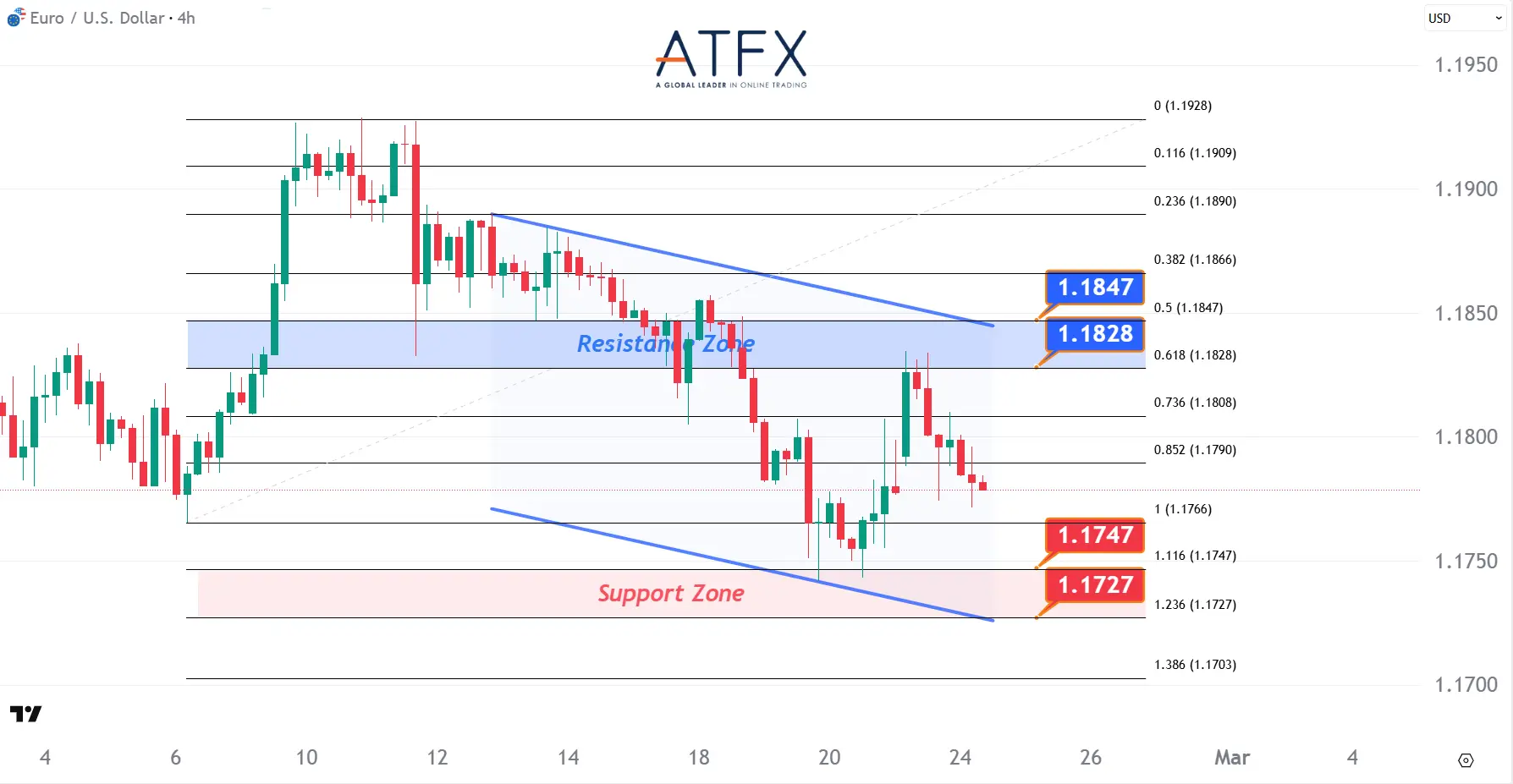
- Resistance: 1.1828 / 1.1847 Support: 1.1747 / 1.1727
The euro rebounded modestly on dollar weakness. The tariff increase to 15% has heightened policy uncertainty, while market expectations for the Fed to hold rates steady in March have risen to 96%, pushing the timing of a rate cut further back. On the charts, selling pressure remains heavy around 1.1828–1.1847. Failure to break above may see the pair retest support at 1.1747–1.1727, with near-term price action biased toward range consolidation.
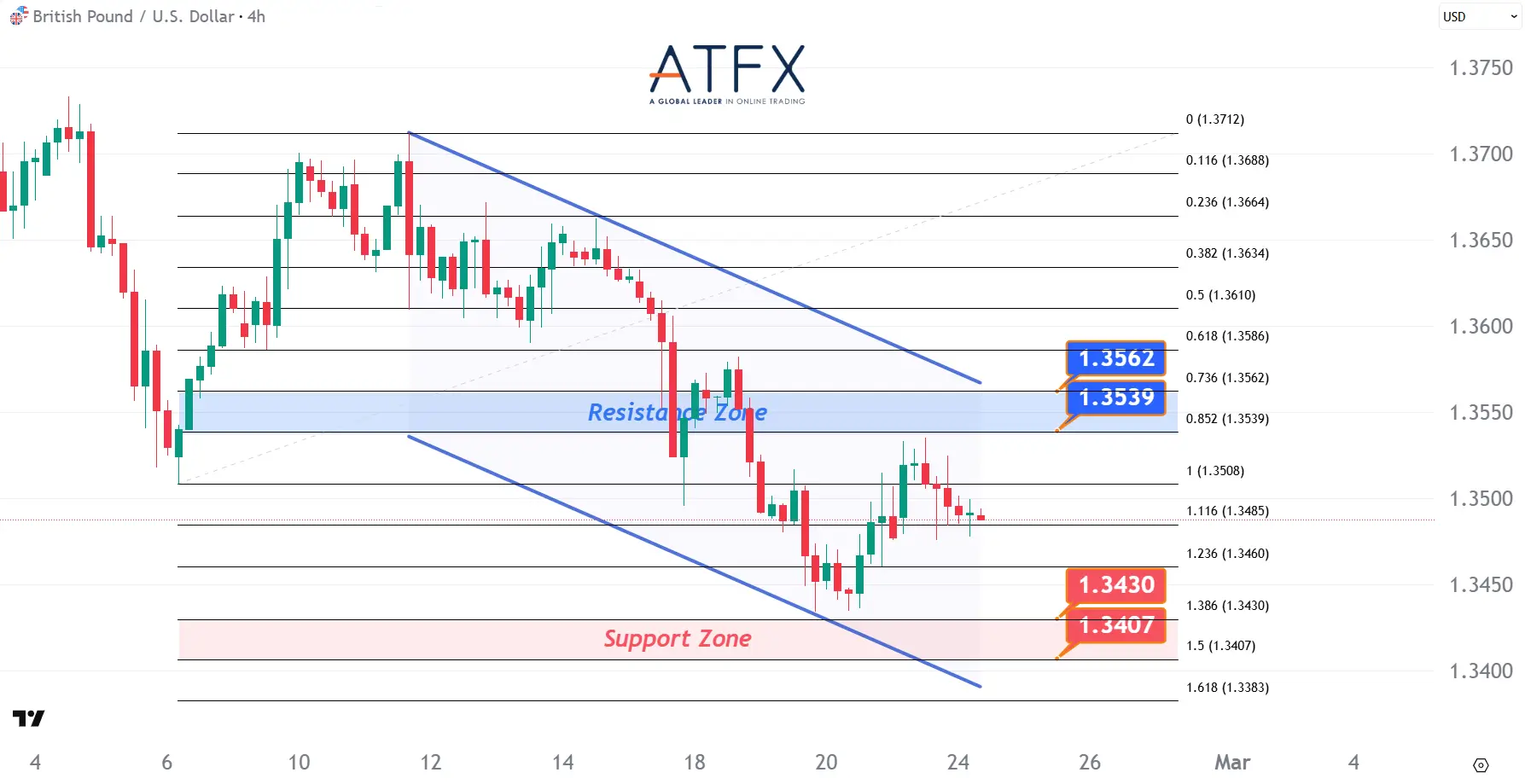
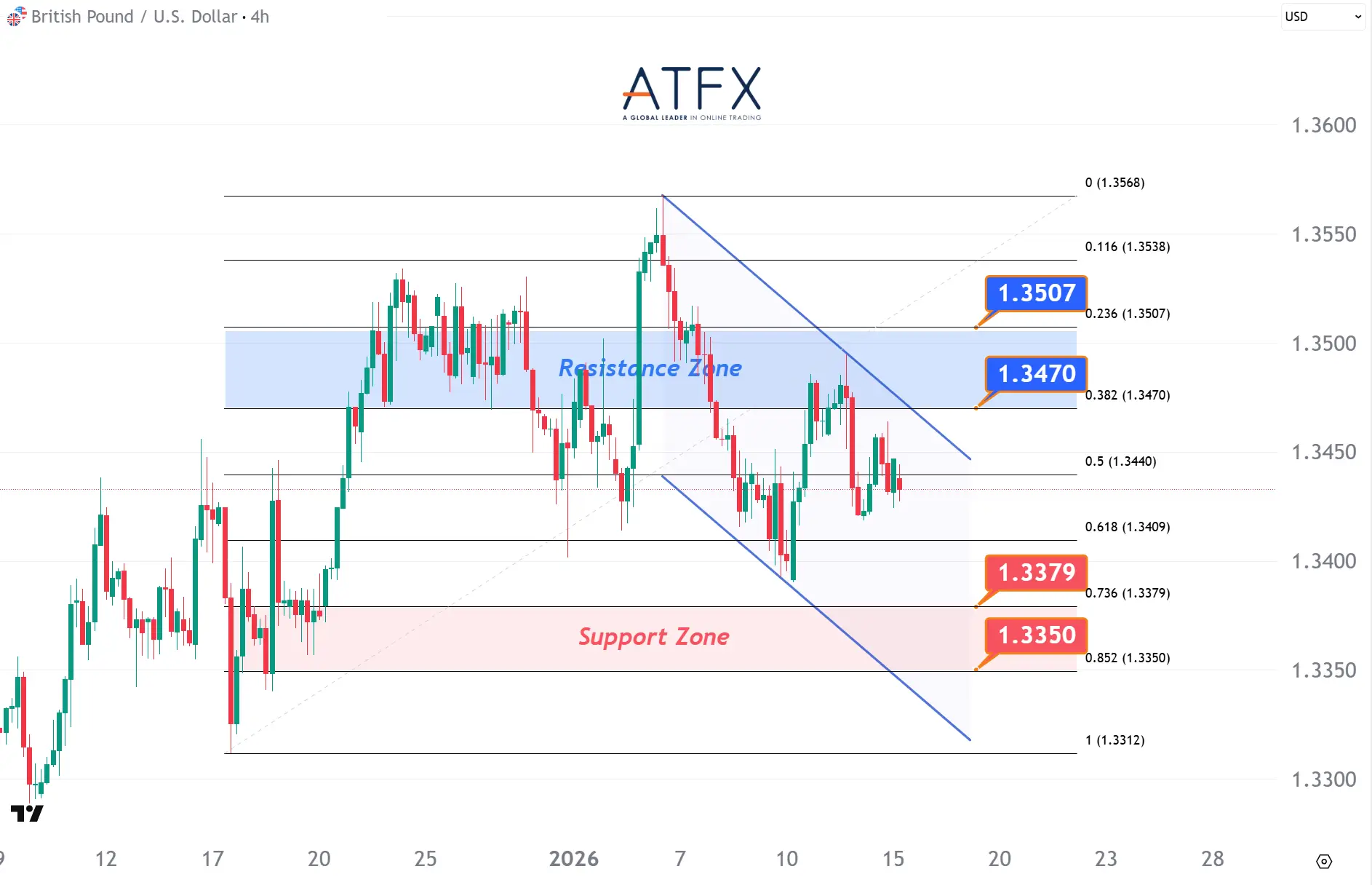
- Resistance: 1.3539 / 1.3562 Support: 1.3430 / 1.3407
Sterling rebounded alongside dollar softness, though tariff escalation and geopolitical risks continue to limit risk appetite. Elevated rate expectations also cap upside potential. Repeated rejection near 1.3539–1.3562 suggests hesitation among buyers. Failure to extend gains may lead to a pullback toward 1.3430–1.3407, reinforcing a range-bound short-term structure.
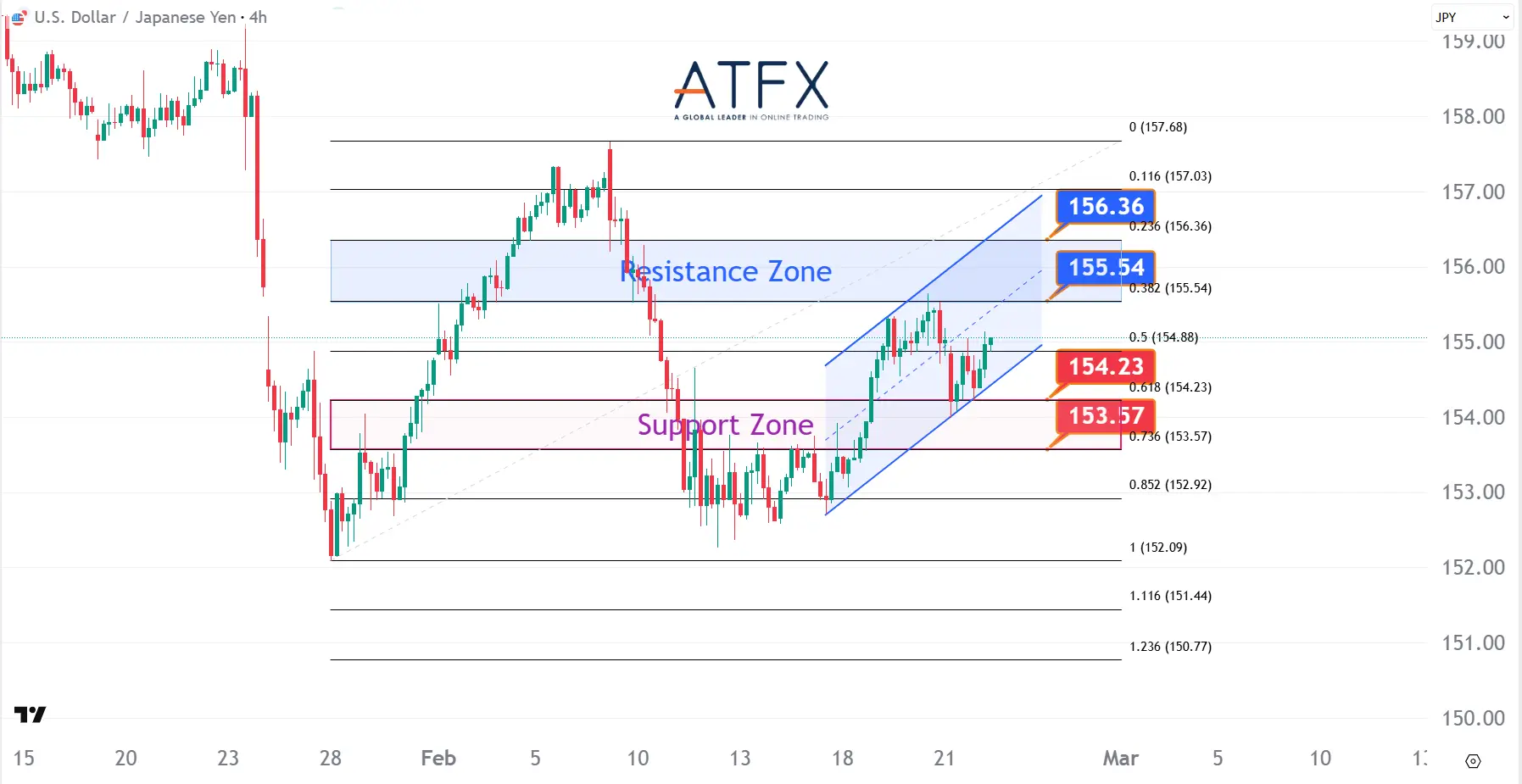
- Resistance: 155.54 / 156.36 Support: 154.23 / 153.57
Slowing dollar momentum has given the yen some breathing room, though high U.S. interest rates prevent aggressive downside positioning. Markets remain focused on developments between the U.S. and Iran. Multiple tests of 155.54–156.36 have met resistance, with quickpullbacks signaling overhead supply. A break below 154.23 could open the door toward 153.57, suggesting continued range-based fluctuations rather than a directional breakout.
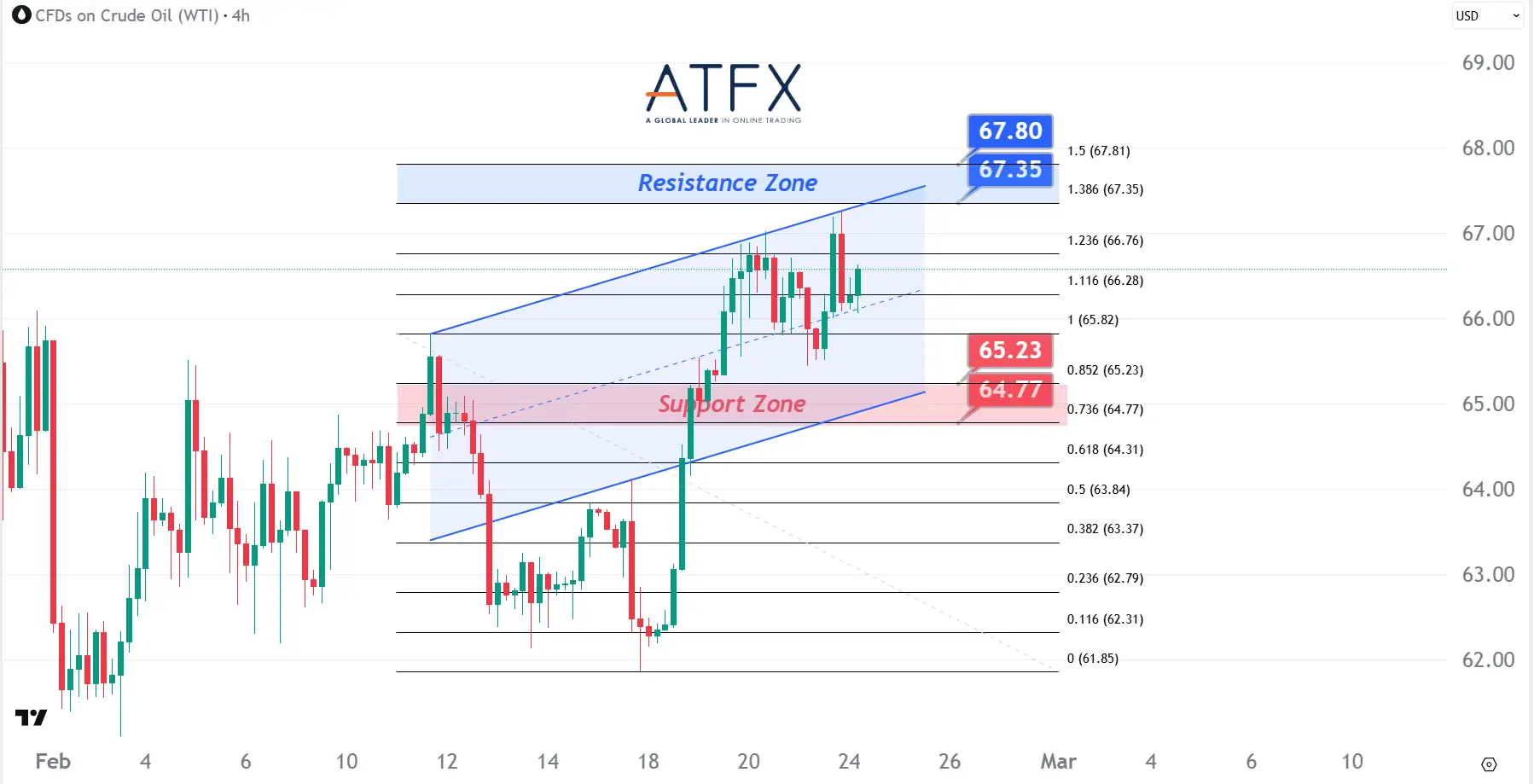
- Resistance: 67.35 / 67.80 Support: 65.23 / 64.77
WTI continues to fluctuate around the $66 area as markets balance expectations around the Geneva talks with demand concerns tied to tariff escalation. Repeated difficulty in the 67.35–67.80 range highlights emerging selling pressure. A break below 65.23 could trigger a test of 64.77, with price action reflecting consolidation at elevated levels.
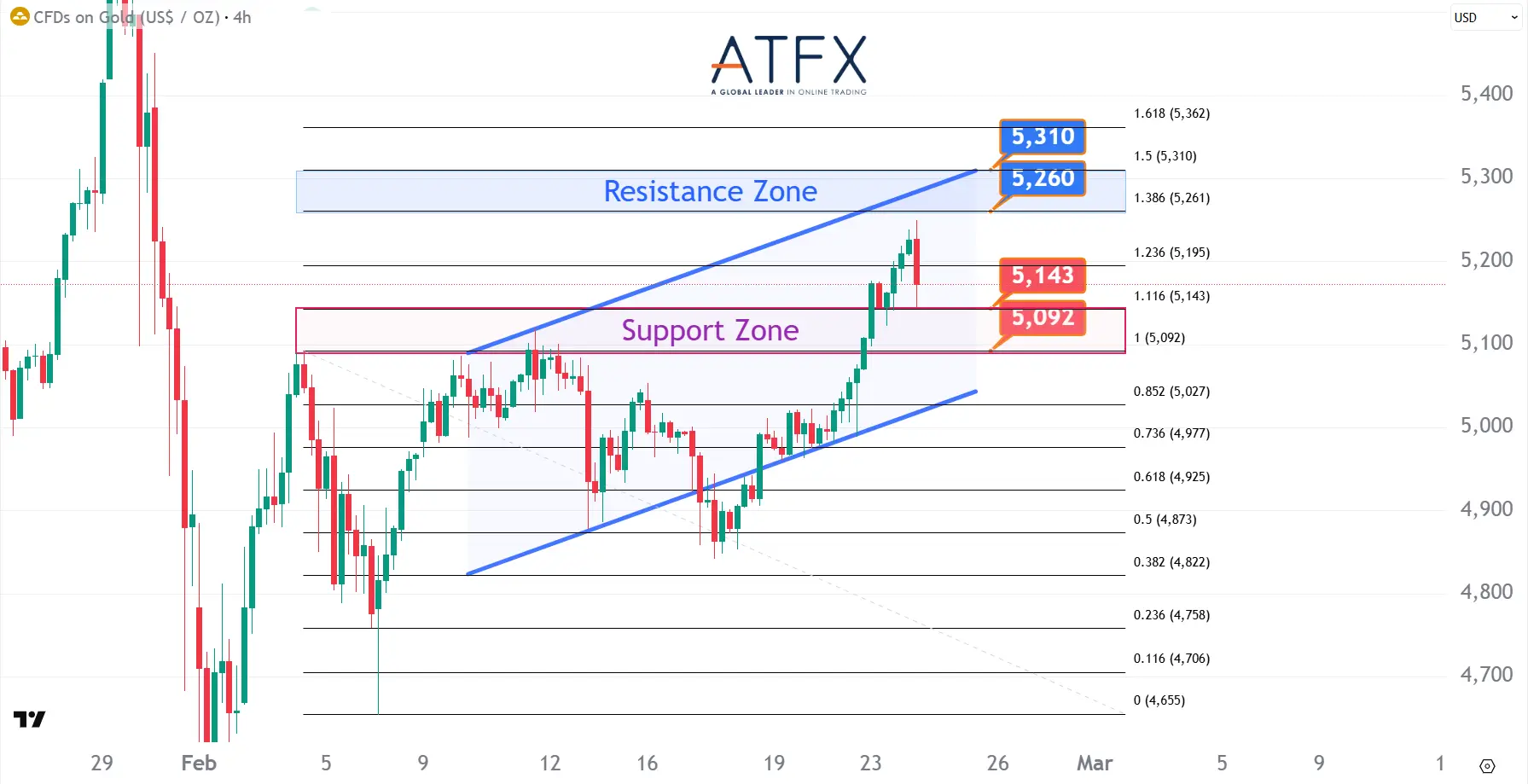
- Resistance: 5,260 / 5,310 Support: 5,143 / 5,092
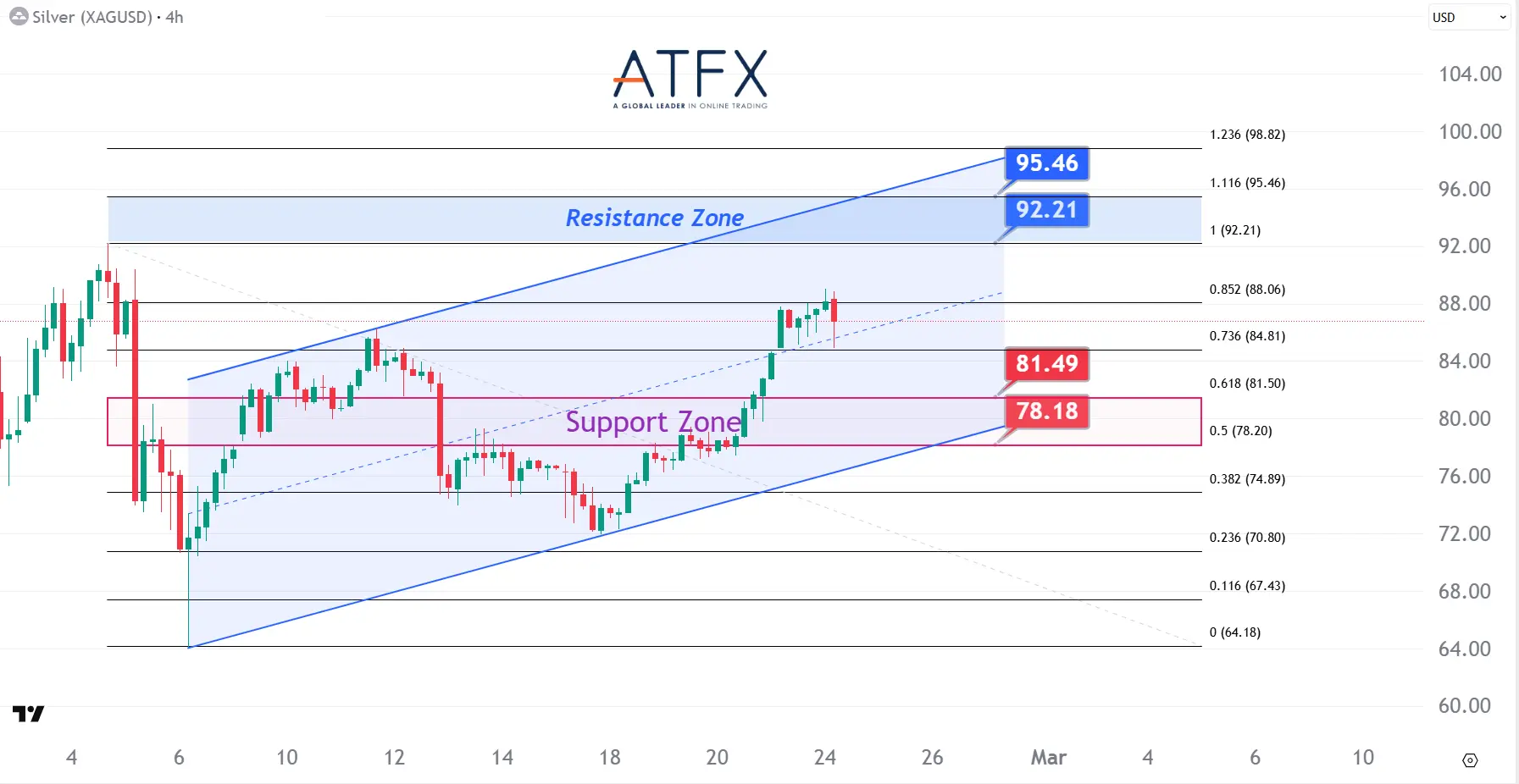
- Resistance: 92.21 / 95.46 Support: 81.49 / 78.18
Gold rallied toward $5,240 amid tariff escalation and policy uncertainty, reigniting safe-haven demand. Persistent inflation has also pushed out rate-cut expectations, supporting bullish sentiment. However, visible resistance has emerged in the $5,260–$5,310 zone. Failure to achieve a decisive breakout may lead to a pullback toward $5,143 or even $5,092, while the broader bias remains constructive amid rising volatility.
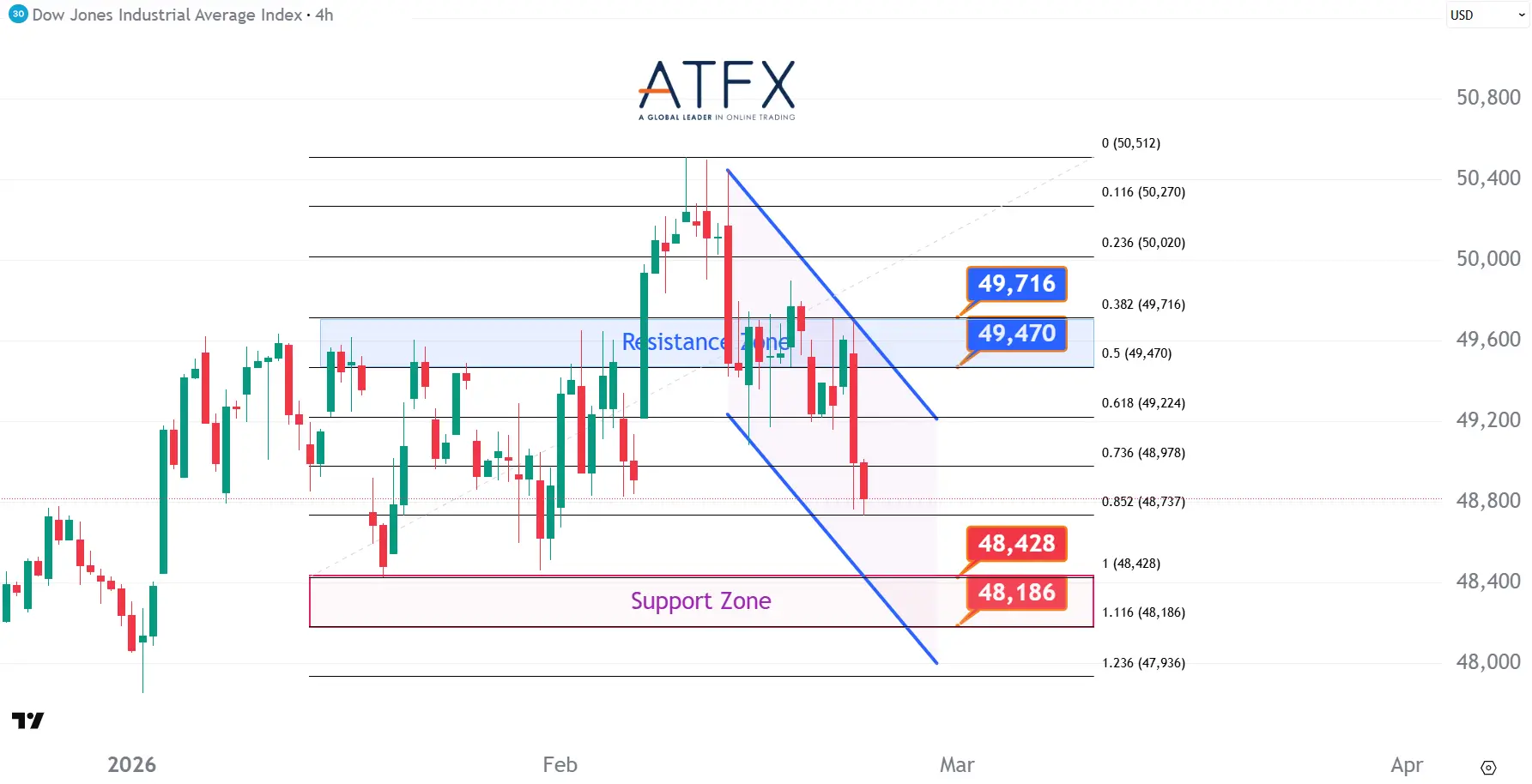
- Resistance: 49,470 / 49,716 Support: 48,428 / 48,186
The Dow plunged 1.66% amid tariff escalation and AI earnings uncertainty, driving defensive positioning. Financial and cyclical sectors led the decline. Rebounds toward 49,470–49,716 appear weak. A break below 48,428 may expose 48,186, suggesting a shift from high-level consolidation toward a softer short-term structure.
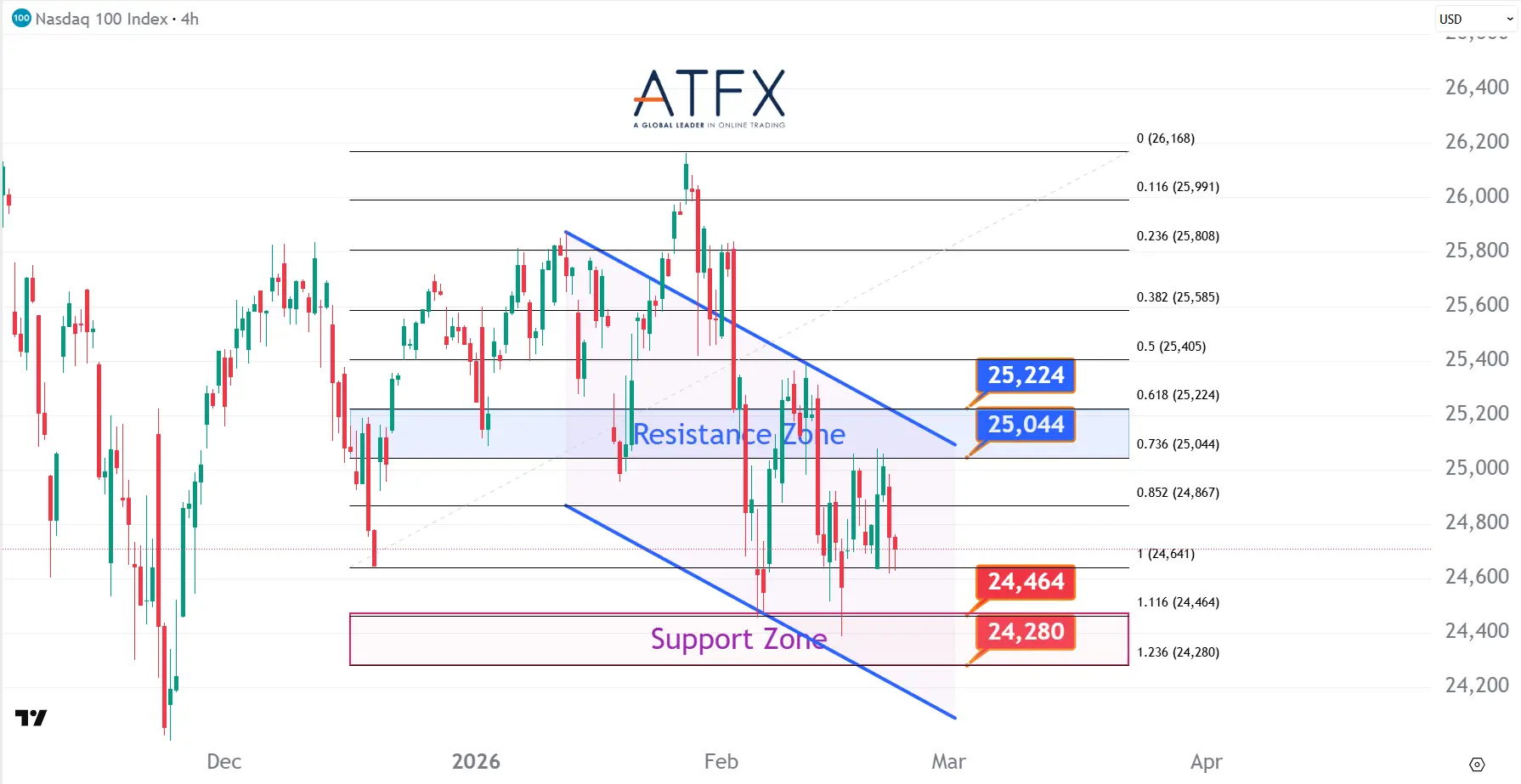
- Resistance: 25,044 / 25,224 Support: 24,464 / 24,280
The NAS100 fell 1.13% as uncertainty surrounding AI earnings prospects weighed on major tech stocks. Tariff developments and rate-path divergence added to volatility. The 25,044–25,224 area continues to cap rebounds. A break below 24,464 could lead to a test of 24,280, reinforcing cautious consolidation rather than aggressive recovery.
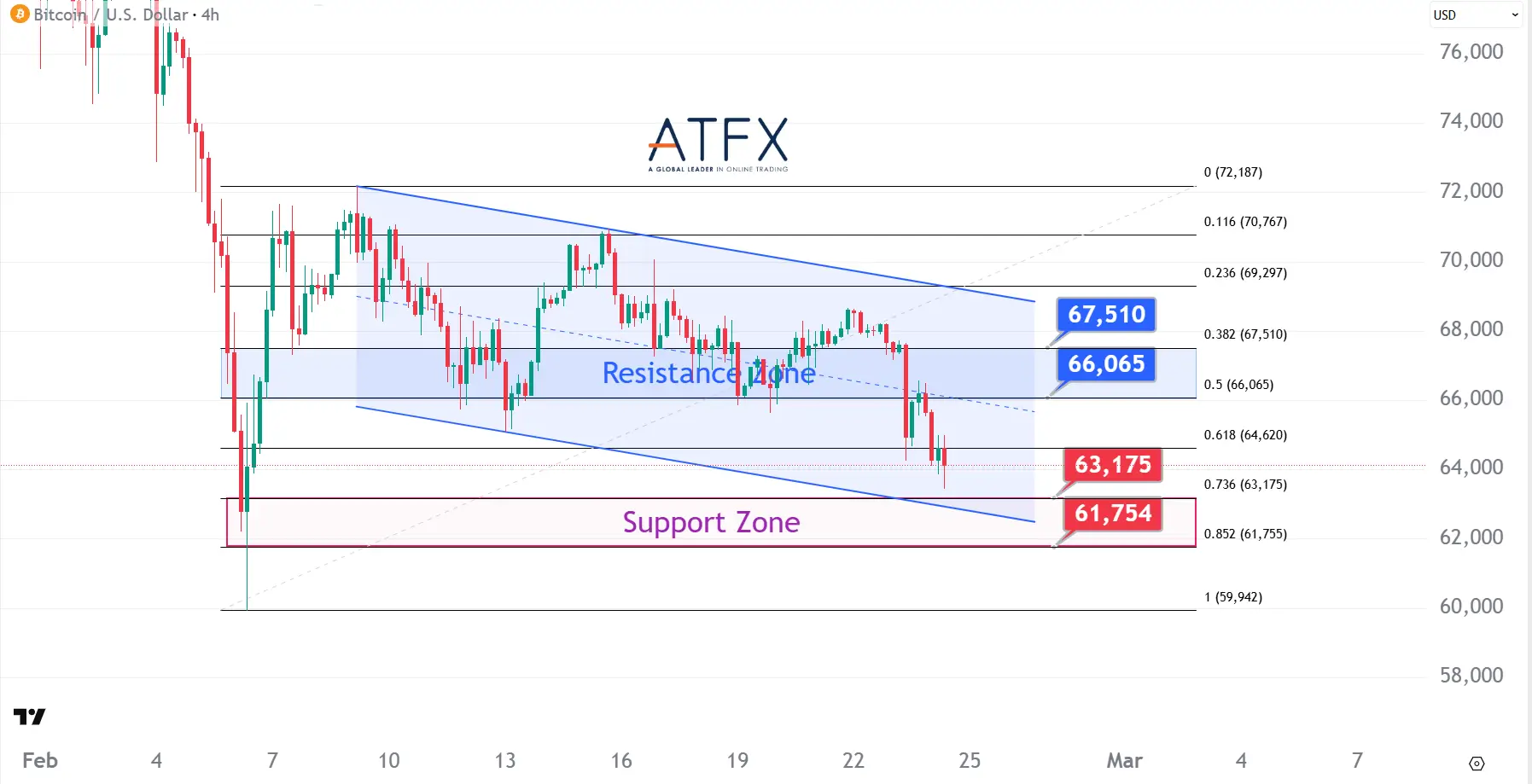
- Resistance: 66065/67510
- Support: 63175/61754
Bitcoin slipped below $65,000 as whale inflows to exchanges intensified, selling pressure, while renewed tariff uncertainty and a mix of slowing growth and sticky inflation dampened risk appetite. Rebounds toward 66,065–67,510 have stalled; a break under 63,175 exposes 61,754, keeping near-term sentiment cautious.
Enjoy trading! The content is for reference only. Please ensure that you understand the risk.