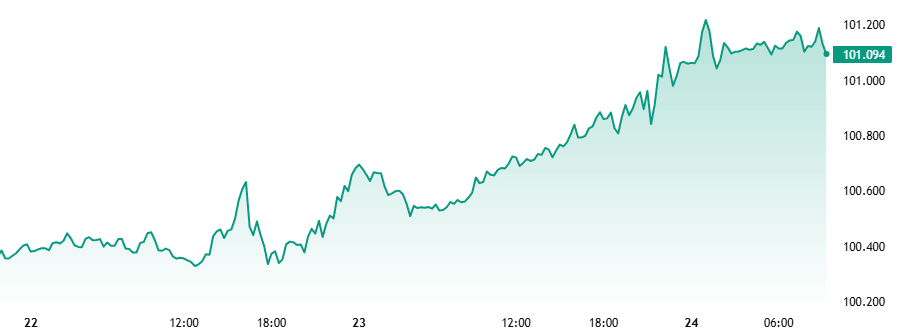


The Japanese yen strengthened sharply against the US dollar on Thursday, reaching a one-month high as investors increased bets that Japanese authorities could intervene to support the currency. Expectations of further Bank of Japan rate hikes and renewed pressure on the dollar also contributed to the yen’s advance.
Market Snapshot
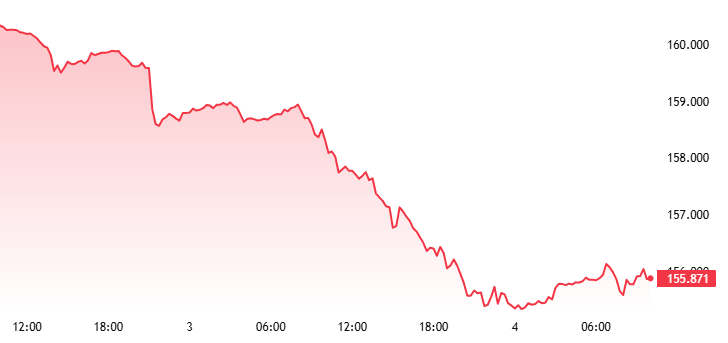
USD/JPY fell towards 158.00, marking the yen’s strongest level against the dollar in about a month. The pair had traded above 160 earlier in the week before reversing lower as traders reduced long-dollar positions.
The yen’s move came alongside broader gains among Asian currencies, with investors responding to a softer US dollar and shifting expectations around global monetary policy.
The US Dollar Index weakened as markets reassessed the Federal Reserve’s interest-rate outlook following mixed US economic data. Lower US rate expectations reduced support for the dollar, helping the yen recover from recent weakness.
Intervention Concerns Return
Japanese authorities have repeatedly warned against excessive currency volatility, and the latest yen move revived speculation that Tokyo could take action if depreciation accelerated.
Japan previously intervened in foreign exchange markets after the yen weakened sharply towards multi-decade lows. Officials have indicated that intervention decisions depend not only on currency levels but also on the speed and disorderly nature of market moves.
The yen’s recent weakness had renewed concerns among policymakers that higher import costs could complicate efforts to bring inflation under control.
Finance Ministry officials continued to monitor currency movements closely, although no immediate intervention action was announced.
BOJ Rate Hike Expectations Support Yen
The yen also gained support from expectations that the Bank of Japan could continue normalising monetary policy.
Markets have increased bets that the BOJ may raise interest rates further as inflation remains above the central bank’s long-term target. Japan’s policymakers have signalled that future rate decisions will depend on economic conditions, wage growth and inflation trends.
Higher Japanese interest rates could narrow the gap between Japan and the United States, reducing one of the main drivers behind the yen’s prolonged weakness.
The currency had previously been pressured by the large difference between near-zero Japanese borrowing costs and higher US interest rates, which encouraged investors to borrow yen and buy higher-yielding dollar assets.
Dollar Weakness Adds Momentum
The yen’s rally was also supported by renewed weakness in the US dollar.
Recent US economic indicators have increased uncertainty over the Federal Reserve’s next policy steps. Softer labour-market signals and signs of moderating growth have strengthened expectations that US rates may eventually move lower.
A decline in Treasury yields has further reduced support for the dollar, making alternative currencies such as the yen more attractive.
Analysts said the dollar’s direction remains closely linked to upcoming US economic data, particularly employment and inflation reports that will influence expectations for future Fed decisions.
Broader Market Impact
The yen’s move has wider implications across global markets because it affects one of the world’s largest funding currencies.
A stronger yen can pressure investors who use the Japanese currency to finance carry trades, where traders borrow in low-yielding currencies and invest in higher-return assets elsewhere.
A rapid yen appreciation could therefore lead to adjustments across equities, bonds and emerging-market currencies if investors reduce leveraged positions.
However, Japanese exporters may face pressure from a stronger currency because it reduces the overseas value of their earnings when converted back into yen.
Outlook
Traders will watch whether USD/JPY can remain below the 160 level and whether Japanese officials provide further warnings about currency movements.
Attention will also turn to upcoming US employment and inflation data for clues on the Federal Reserve’s policy path. Stronger-than-expected US figures could support the dollar and slow the yen’s recovery.
Markets will also monitor Bank of Japan communication for signals on the timing of future rate increases. A combination of tighter Japanese policy and weaker US rate expectations could provide further support for the yen, while renewed dollar strength may limit additional gains.